
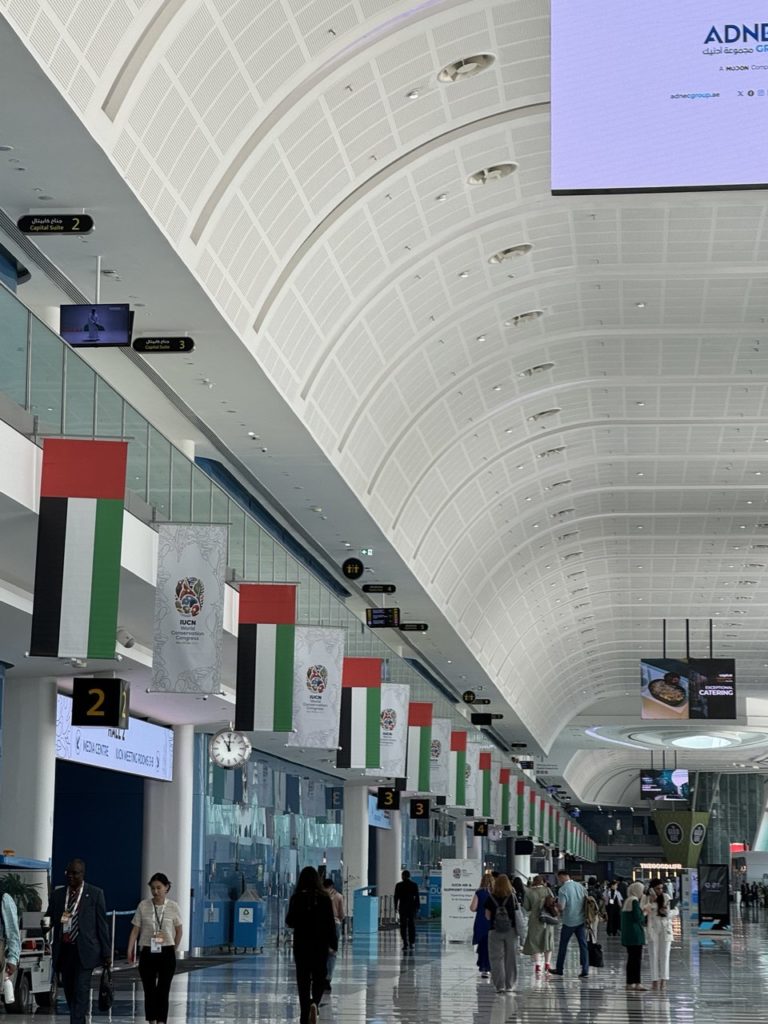
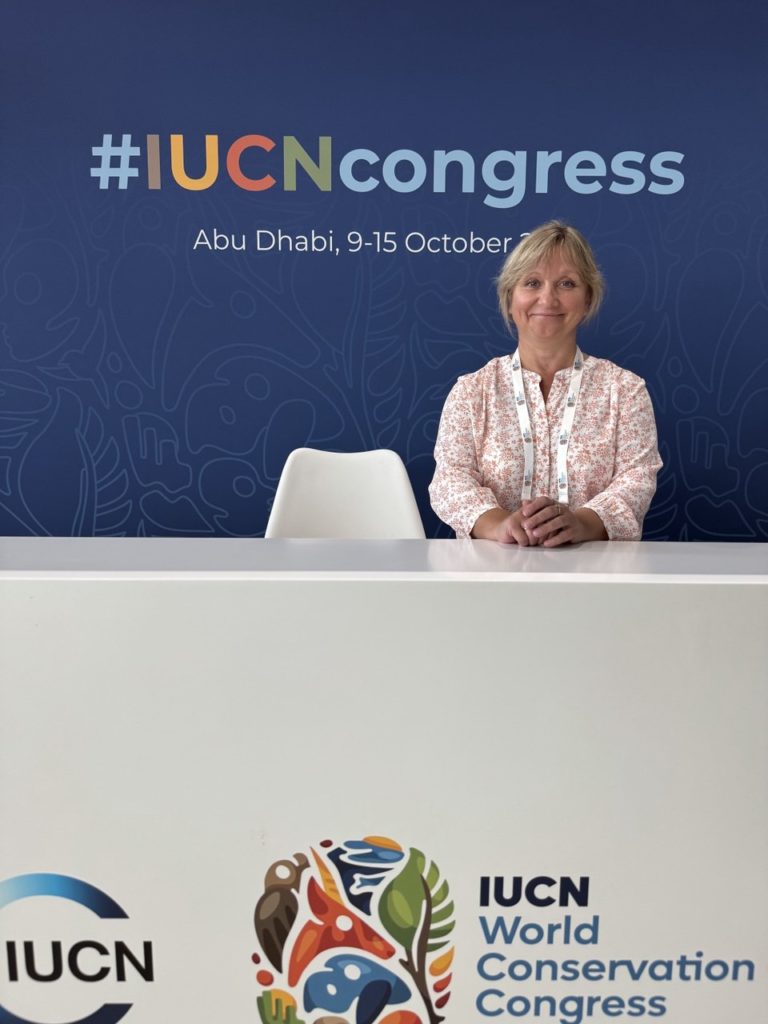
Учора в столиці Об’єднаних Арабських Еміратів представники ЕПЛ та УПГ як члени Міжнародного союзу охорони природи (МСОП/IUCN) взяли участь у відкритті конгресу цієї організації. Всесвітній конгрес зібрав понад 10 тисяч науковців, представників екологічних державних і неурядових організацій з усіх континентів. Метою конгресу є обговорення шляхів відродження глобального управління задля збереження природи та людей.
Зі зростанням глобальної нестабільності водночас і міжнародна, і національні архітектури екологічного управління перебувають у занепаді, не відповідають сучасним викликам зі збереження природи, адаптації до змін клімату. Під час офіційного відкриття і п’яти модерованих панельних дискусій доповідачі намагалися задати тон, вектори роботи учасників конгресу, надихнути їх, дати свої бачення проблем глобального лідерства у збереженні природи в поляризованому світі.
Відкрила захід міністерка ОАЕ з питань довкілля та зміни клімату доктор Амна бінт Абдулла Аль Дахак, зазначивши, що ОАЕ щодня підтверджують свою новаторську роль як глобальної рушійної сили інноваційних рішень та комплексної стійкості для всіх народів, де природа є в центрі уваги з планування розвитку країни. Пані міністерка наголосила, що ОАЕ мають значний досвід у сфері охорони природи, що відображає глибоко вкорінену спадщину стосунків еміратського народу з довкіллям. Доказом такої тяглості є розроблена і прийнята національна стратегія збереження біорізноманіття до 2031. Ця стратегія спрямована на просування рішень, заснованих на повазі і любові до природи, відновлення екосистем, захисті видів, що знаходяться під загрозою зникнення, та розширення природних заповідників, які зараз охоплюють понад 15 % території країни.
Промова пані міністерки ОАЕ з питань довкілля та зміни клімату була надихаючою. Втім, проїжджаючи по Абу – Дабі, ми практично не побачили системного впровадження ВДЕ, гуманного ставлення до безпритульних тварин, раціонального використання водних ресурсів тощо.
Президентка МСОП Разан Халіфа Аль Мубарак у своєму виступі зазначила, що єдиний голос усіх учасників конгресу має нагадати людству про те, що збереження людства і збереження природи є нероздільними. Ми розуміємо, як ніколи раніше, наскільки глибоко наше життя залежить від природного світу, проте продовжуємо діяти так, ніби ми відокремлені від нього. Тут, в Абу-Дабі, у нас є шанс перетворити розуміння на єдність, а єдність на дії. Рішення, прийняті цього тижня, визначатимуть, чи здатні ми об’єднати свої зусилля задля збереження природи. Лідери держав, міжнародних і національних організацій мають об’єднати свої зусилля і мобілізувати до співпраці корінні народи, місцеві громади. Мобілізація громад, корінних народів, молоді, жінок, просвіта, технології у збереженні природи, гідність, здоров’я, чисте довкілля, збалансований розвиток і зелені трансформації – це одні із основних напрямків нової стратегії МСОП, яка має бути затверджена членами МСОП на конгресі. Завершуючи свій виступ, пані Разан Халіфа Аль Мубарак наголосила на тому, що ми маємо діяти вже сьогодні, щоб врятувати прекрасне – нашу природу, її розмаїття.
Генеральна директорка МСОП доктор Гретель Агілар наголосила на тому, що ми не можемо скласти руки у захисті природи, бо ми маємо знання, досвід, мотивацію працювати разом над її збереженням від Африки до Азії, від Азії до Америки та Європи. Весь час ми підтримуємо один одного. Об’єднані ми маємо більше можливостей у захисті довкілля. Вона зазначила на тому, що ми говоримо різними мовами, але ми маємо повагу до культури один одного, до можливостей ділитися знаннями, ідеями, щоб протистояти глобальним проблемам і викликам у збереженні довкілля. Всі ми розуміємо, що збереження довкілля – це основа збереження людства. Через кордони ми будуємо одну спільноту, яка стоїть на захисті природи. Ми обрали нашу сторону – сторону природи, людей, справедливості, солідарності і відповідальності. Разом ми здатні донести до людства необхідність збереження довкілля вцілому.
Під час панельних дискусій знову і знову наголошувалося на проблемах глобального врядування, на необхідності реформації водночас і міжнародних, і національних архітектур екологічного врядування, на необхідності реформації інституцій збереження природи, необхідності системних змін у міжнародному екологічному праві, яке здебільшого не працює і не вирішує сучасні проблеми поляризованого світу.
Маємо надію, що конгрес, що проводиться кожні чотири роки і дозволяє понад 1400 організаціям-членам МСОП демократично визначати найактуальніші проблеми охорони природи, дійде до згоди у прийнятті нової стратегії, що на десятиліття визначить генеральні напрямки збереження довкілля та інструменти їхнього впровадження задля порятунку спільно дому всього людства.
