
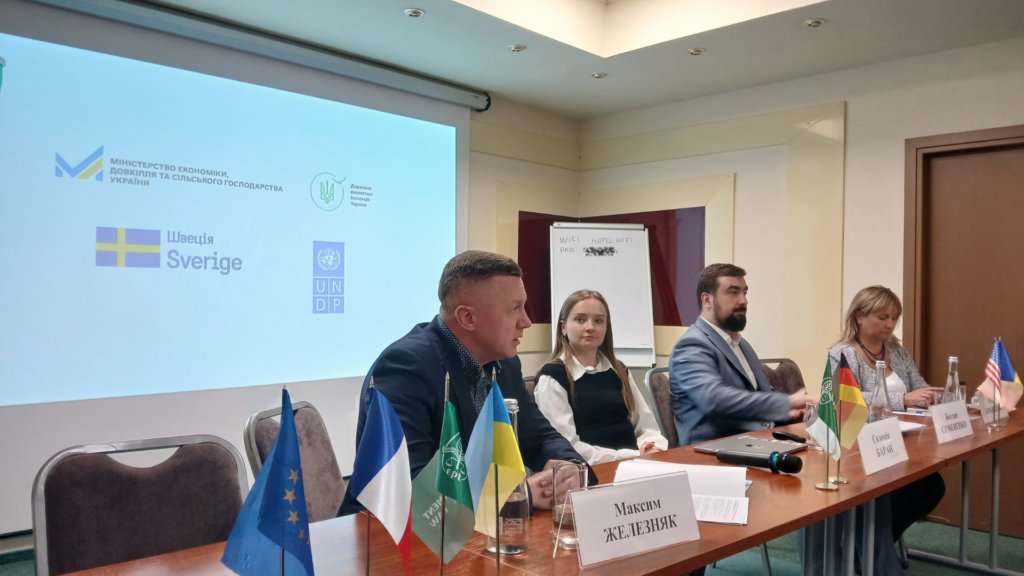
The first day of the international conference “ Modern environmental policy of Ukraine: transparency, efficiency and security in conditions of the military aggression” proved that despite difficult circumstances, the Ukrainian environmental community continues to form deep analytical approaches, exchange experience and jointly seek solutions to build a sustainable system of environmental management.
After the introductory block, the participants focused their attention on the topic of access to environmental information and the role of the public in decision-making, which was the second block of the conference.
The moderator of the block was Olena Sas, ANTS projects and development coordinator, who emphasized that environmental democracy is not only access to data, but also the ability of society to really influence the processes that shape the environment in which we live.
The speakers presented analytical products and practical cases of implementing international openness standards.
Head of EPL legal department, attorney Olha Melen-Zabramna, presented the shadow report on Ukraine’s implementation of the requirements of the Aarhus Convention in 2021–2024, noting both positive dynamics and serious gaps in access to environmental information during martial law.
The head of “Save Dnipro” NGO, Iryna Chernysh, spoke about modern information and non-information technologies as an effective tool for ensuring access to environmental information in Ukraine. She spoke about practical aspects of implementing by business entities of the requirements specified in a conclusion on environmental impact assessment (EIA).
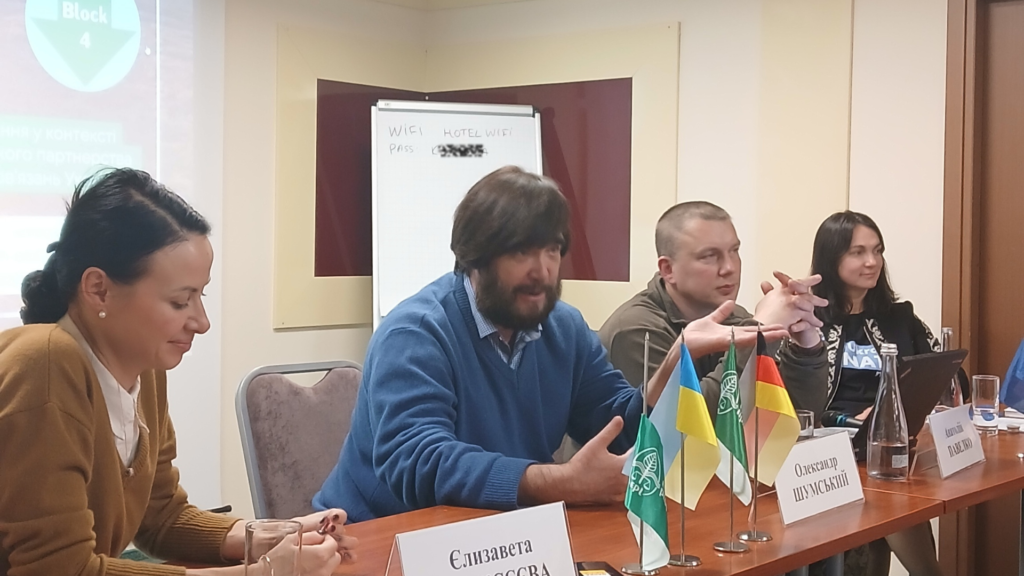
International environmental law expert Serhiy Vikhryst focused on issues of access to information under martial law, when security restrictions often become a barrier to public oversight of environmental issues.
Maryna Shymkus, the director of Environmental Assessment Department, gave a particularly interesting presentation sharing her experience in conducting public hearings on environmental impact assessment, focusing on practical aspects of working with the public that arose during the implementation of the environmental impact assessment procedure and changes in the format of public participation in the EIA during the coronavirus pandemic and in wartime.
Presentation of the head of EPL analytical department Yelyzaveta Aleksyeyeva was devoted to the issue of issuing an integrated environmental permit (hereinafter referred to as IEP) as a new tool for controlling business activities. She noted that the practice of implementing legislative provisions is currently absent. The first public discussions on the procedure for issuing IEPs have not yet taken place.
The discussion of the topics of this block ended with a lively debate on the need to update state transparency mechanisms — in particular, through integration of environmental data into open registers, creation of modern online platforms, and improvement of procedures for responding to information requests.
The third block of the conference was dedicated to the need to implement institutional reforms as the basis of anti-corruption environmental policy.
Within this block, participants focused on the modern architecture of environmental governance. EPL lawyer Solomiia Baran spoke about the main models of organizing the environmental function in state authorities, including in regional military administrations. She outlined the results of EPL analytical research, which demonstrate a significant staff shortage in the performance of environmental functions at all levels of government.
In his speech, deputy director of the Department of Protected Areas and Biodiversity Maksym Zheleznyak supported the need for reforms and analysis of the content and scope of powers of state institutions in the environmental sector.
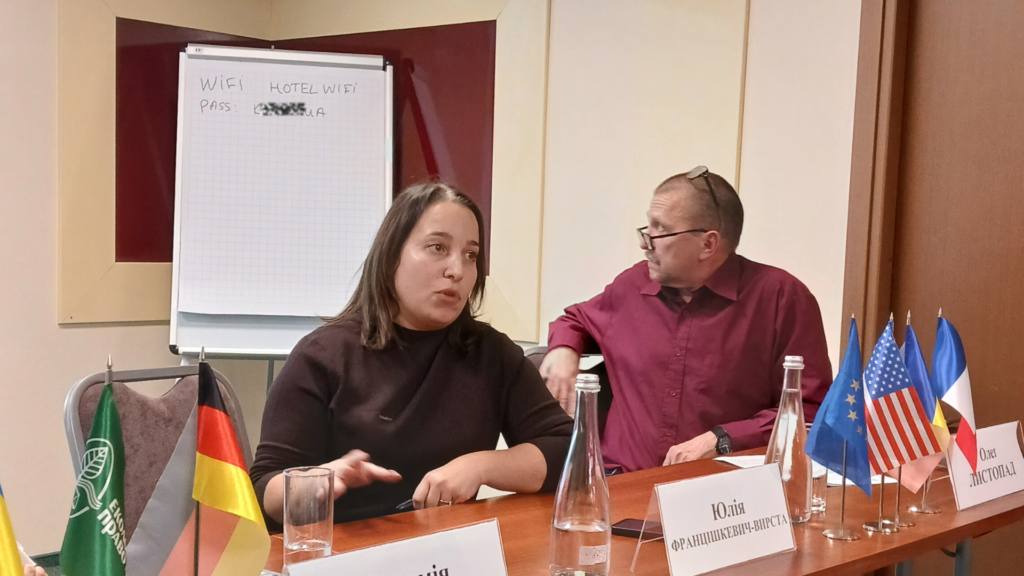
EPL lawyer Yulia Frantsishkevych-Vyrsta spoke on the role of local governments in the system of environmental governance, their institutional capacity and challenges of integrity. She emphasized the importance of local governments as the primary link in implementation of environmental policy and the the EU directives. She outlined problems with functioning of official websites of local governments, in particular with regular upload of information there. .
Discussing the presentations, the conference participants noted that the reform of the environmental governance system should include formation of new organizational structures, updating staff lists, adequate and equal distribution of functional powers, conducting training for personnel in the environmental field, and increasing salaries.
After a break, the conference continued with the fourth block, dedicated to the topic of subsoil use risks in the context of the Ukrainian-American partnership and Ukraine’s European integration obligations.
The moderator of block 4 was Hanna Hopko, ANTS expert on foreign policy. She began the discussion with a critical analysis of production sharing agreements – a form of cooperation between the state and investors in the extractive sector, which has significant potential, but carries serious risks in the absence of proper control.
The first speaker of the bloc was Anatoliy Pavelko, EPL’s senior lawyer, who presented a practical perspective on the mining system functioning. He noted that the current permitting system remains complicated and often closed, creating risks of abuse and corruption.
In her presenation, Yelyzaveta Aleksyeyeva presented an analytical overview of legal gaps in the field of subsoil use. She noted that the current legislation provides for a number of exceptions and simplified procedures, which in martial law conditions are often applied without proper safeguards.
Oleksandr Shumskyi, head of the Department of Tax Administration of Resource, Rent and Local Taxes on Legal Entities of the State Tax Service of Ukraine, presented interesting and real examples of conducting state examination and assessment of mineral reserves. The speaker emphasized that any mineral extraction project should be considered through the prism of environmental safety and sustainable development, and be based on transparency and reliability of data.
The final presentation of the block was made by EPL’s lawyer, attorney Olena Pelykh. She spoke about preliminary assessment of environmental risks before issuing a special permit for subsoil extraction. She analyzed legislative aspects of the EIA procedure in subsoil use, and holding auctions for allocating subsoil plots for use.
Summarizing this block, the conference participants actively discussed environmental consequences of subsoil use, mechanisms for accessing geological information, as well as the role of international partners in implementing transparency standards in the extractive sector. They gave a critical assessment of the issue of Ukraine’s advantages in concluding production sharing agreements.
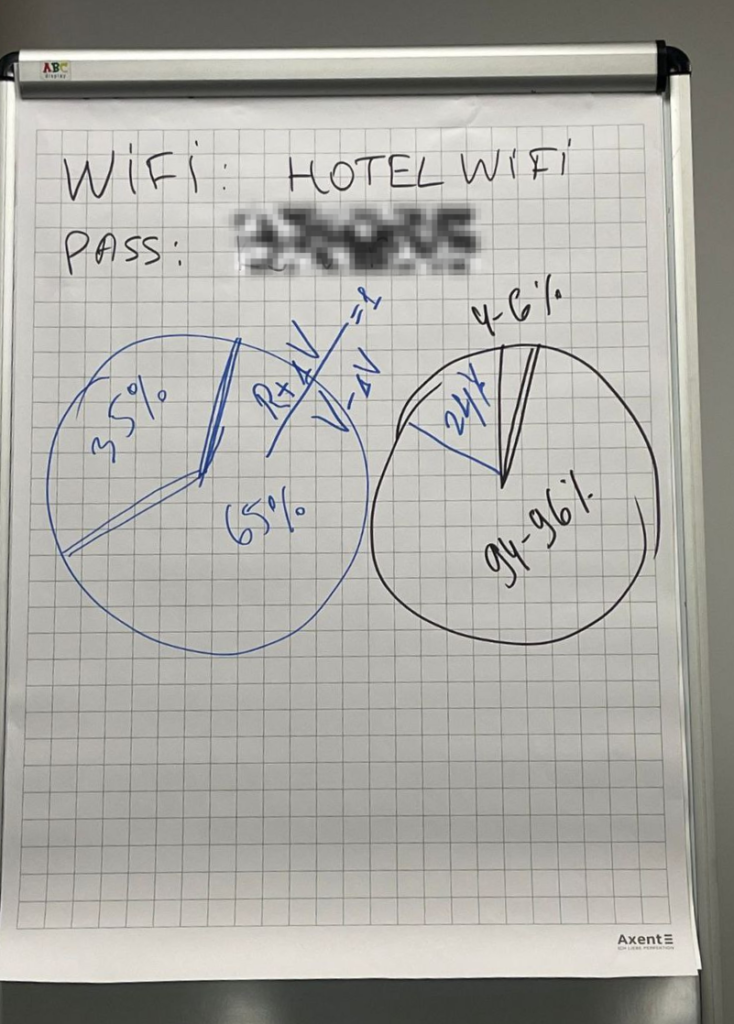
Investigating the issue of distribution of profits from subsoil use between the state (society), as the provider of subsoil plots, and the investor, the conference participants drew attention to the general proportions of profitability in the mining industry. According to the examples given during the discussion, on average 35% of the profit goes to the state, while 65% goes to the investor.
However, the situation with lithium mining caused particular concern. As the conference participants noted, under the current agreements of the Government of Ukraine on the distribution of profits from lithium mining, Ukraine can receive only 4%, while 96% of the profit will belong to a foreign investor. As moderator Hanna Hopko noted, such a distribution, especially taking into account the state budget for 2026, is nothing but state treason and economic capitulation of Ukraine.
Summing up the first day of the conference, the participants noted the high level of analytical discussions and constructive exchange of experience between representatives of the authorities, civil society organizations, scientists and experts. The discussions demonstrated a common desire to form an effective and transparent environmental policy even in the most difficult conditions of wartime.
The second day of the conference promises to be no less meaningful – it will be dedicated to preserving biodiversity during a full-scale war.
