
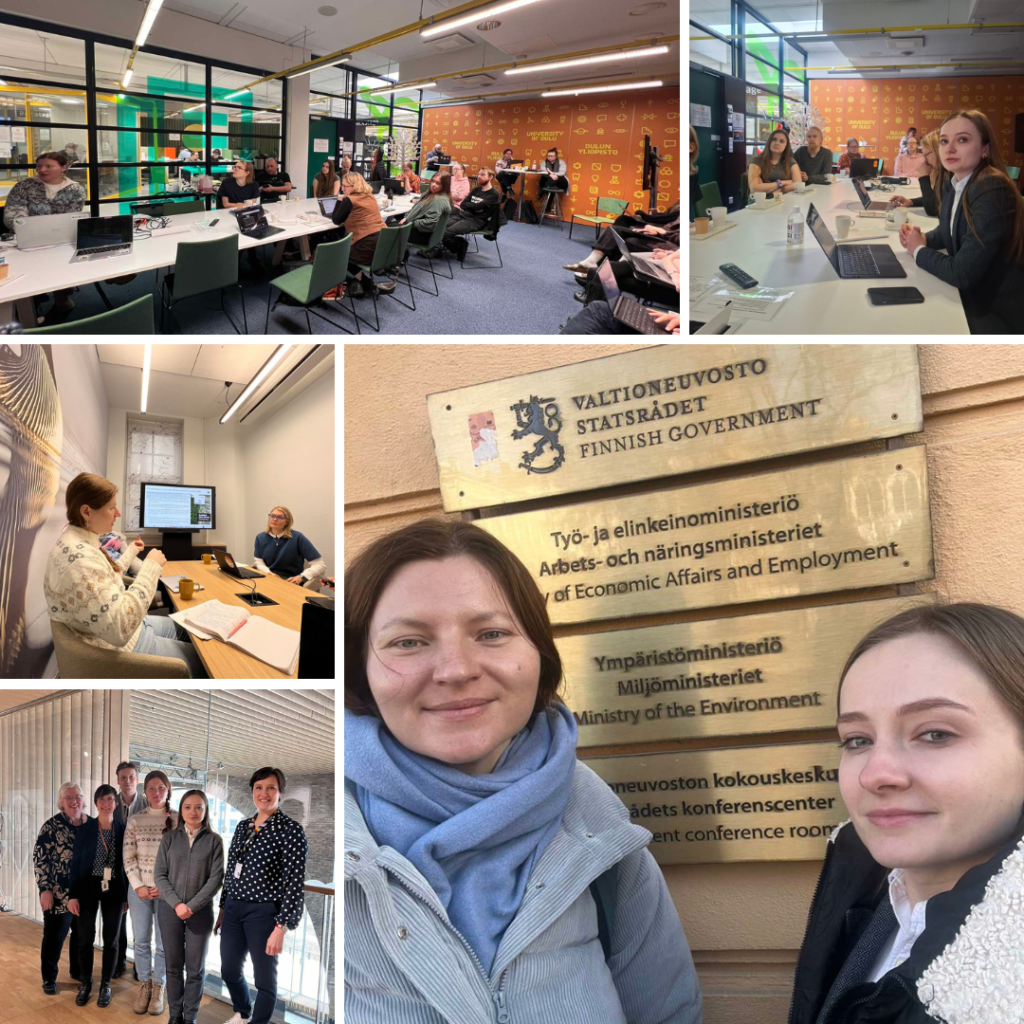
Representatives of the International Charitable Organization “Environment–People–Law” took part in a series of professional events in Finland focused on the environmental impacts of war and international cooperation. On March 30, 2026, EPL representatives joined the first seminar of the “Nature and Wars” series, titled «Understanding the Impact of War on People–Nature Relationships», held at the University of Oulu. The initiative aims to explore the multifaceted effects of armed conflict on the environment and biodiversity, with a particular focus on Ukraine, while fostering interdisciplinary dialogue and academic cooperation.
The seminar brought together researchers and practitioners to discuss both theoretical and practical dimensions of environmental harm caused by war. Presentations covered topics such as environmental peacebuilding, the ecological consequences of hostilities in Ukraine, and ecosystem recovery processes. EPL experts contributed insights based on field research, highlighting pollution, ecosystem destruction, biodiversity loss, and long-term risks to human health. Particular attention was also given to legal challenges, including the lack of international recognition of ecocide as a crime and the difficulties in investigating and proving environmental damage during the war.
The event concluded with a discussion on documenting environmental damage, ecosystem restoration, and improving legal accountability mechanisms. Overall, the seminar served as an important platform for knowledge exchange and strengthening international collaboration in addressing environmental challenges in wartime.
On March 31, EPL representatives continued their visit in Helsinki with a series of working meetings involving Finnish governmental institutions, academia, and environmental organizations. Discussions at the Ministry of the Environment of Finland, with participation from the Ministry for Foreign Affairs and the Finnish Environment Institute, focused on documenting war-related environmental damage, advancing accountability mechanisms, and enhancing bilateral cooperation between Ukraine and Finland.
Additional meetings were held with researchers from the University of Helsinki, where EPL representatives shared field-based findings and engaged in interactive discussions on environmental law and the broader implications of war-related environmental harm. These exchanges highlighted the importance of interdisciplinary and cross-sectoral cooperation in strengthening legal and institutional responses.
During the second day of meetings, EPL representatives also met with WWF Finland to discuss sustainable, nature-based recovery of Ukraine, environmental governance, and EU integration processes. Further discussions addressed approaches to documenting environmental damage and shaping international perspectives on ecocide. A meeting with the Helsinki City Environment Department provided insights into local environmental monitoring systems and governance practices.
The visit underscored the importance of international partnership and knowledge-sharing in addressing the environmental consequences of war and supporting Ukraine’s path toward environmental recovery and accountability. EPL expresses its sincere gratitude to its Finnish partners for their openness and continued support.
