
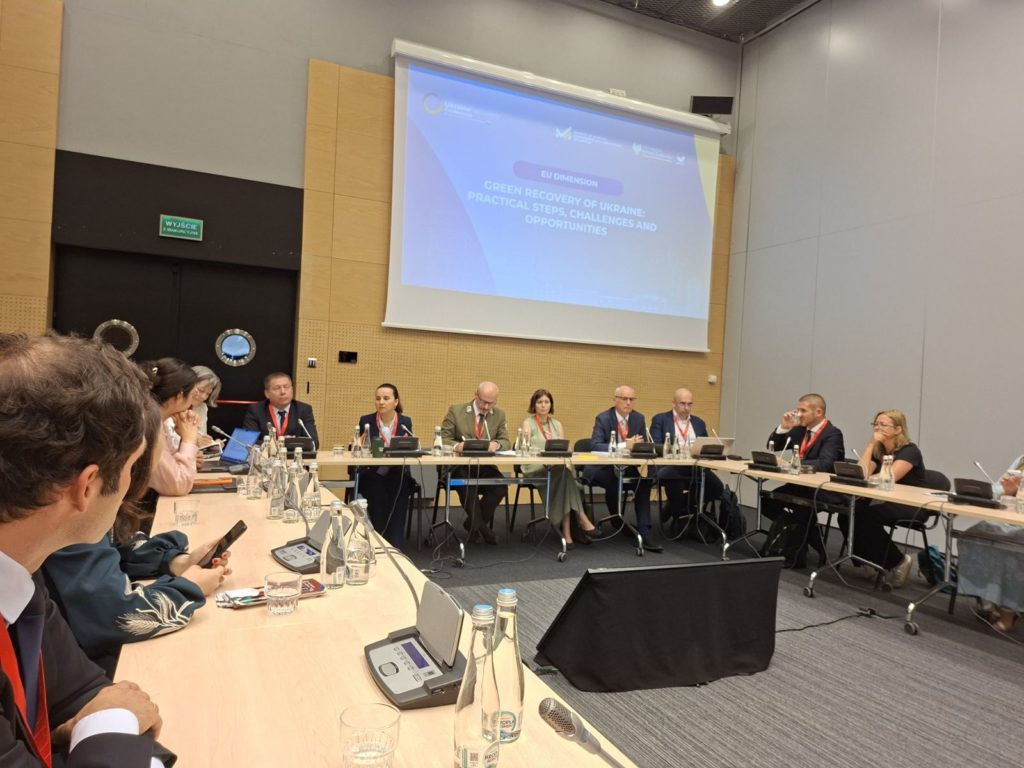
EPL participated in developing the concept and moderating the workshop at the conference in Gdansk entitled “Green Recovery of Ukraine: Practical Steps, Challenges and Opportunities.”
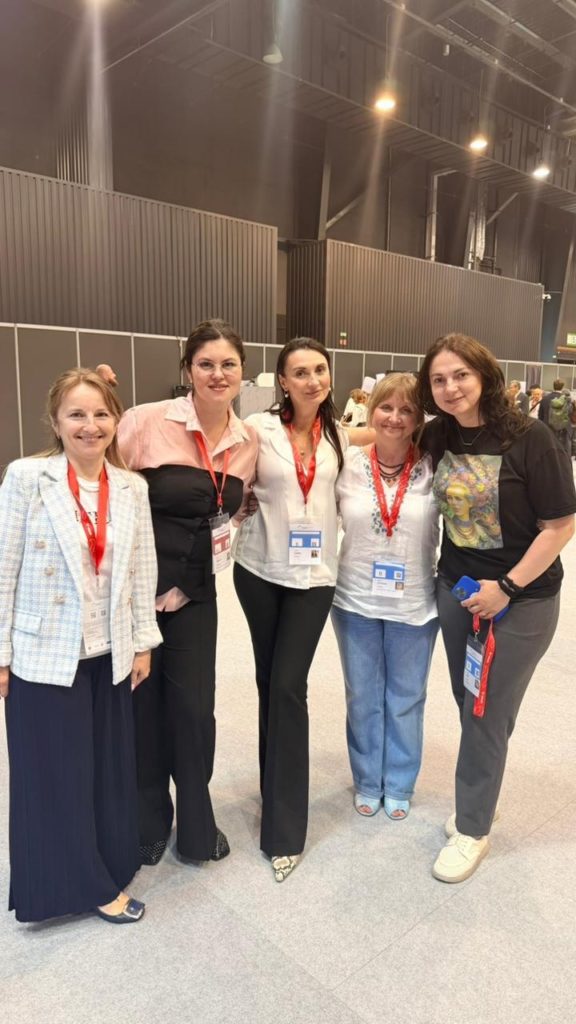
Ukrainian society aims to recover from the consequences of Russian armed aggression in a green manner, and nature conservation is the foundation and integral part of this process. Therefore, there is a need to once again emphasize the main challenges, opportunities and needs for the implementation of nature-based approaches and key instruments of state environmental governance – environmental control, environmental monitoring and policy instruments aimed at “green recovery”. Each of these instruments plays an important role both in ensuring environmental governance in wartime and in supporting sustainable recovery and growth.
The event was attended by Oleksandr Krasnolutskyi, Deputy Minister of Economy, Environment and Agriculture of Ukraine, Urszula Zielinska, State Secretary of the Ministry of Climate and Environment of the Republic of Poland, Iryna Stavchuk, Director of the Eastern European Programme of the European Climate Fund, Tomasz Pasierbek, Director of the Babia Góra National Park, Krzysztof Michalak, Senior Programme Manager, Environment Directorate, OECD, Roman Zinchenko, Chairman of the Board of the NGO “Greencubator”.
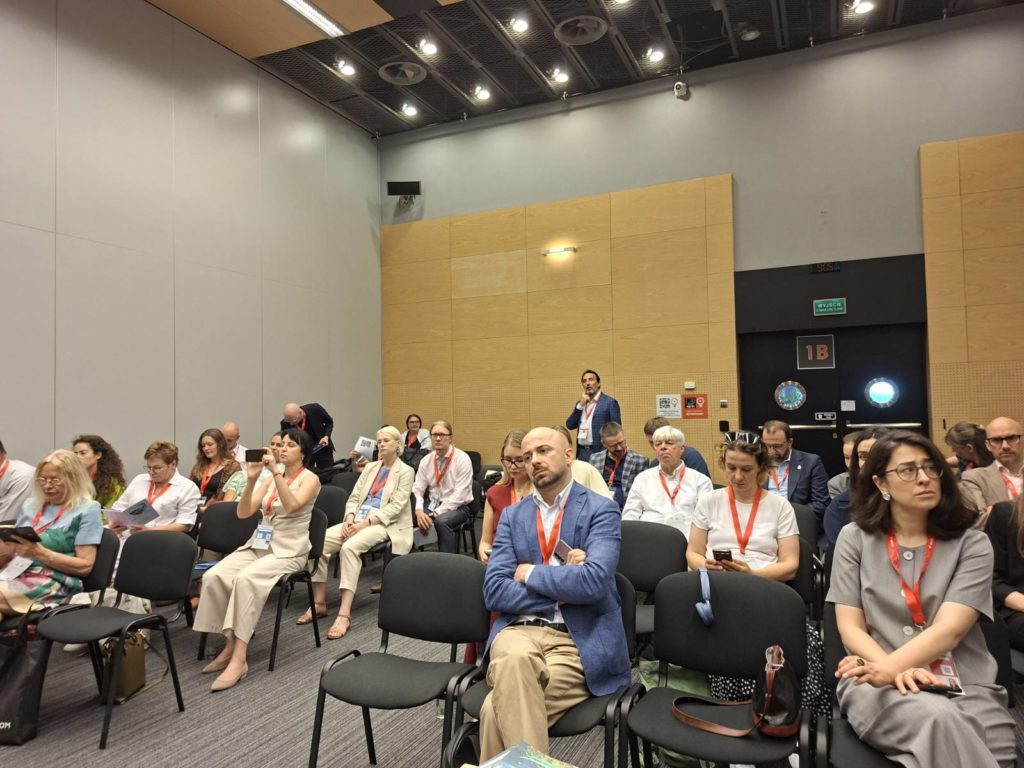
Moderator Olena Kravchenko, director of ICO “Environment-People-Law” (EPL), welcomed the participants and noted the importance and uniqueness of this event – the first in the history of all conferences on European integration reforms and Ukraine’s recovery. Ms. Olena reminded that Ukraine has one quarter of the world’s reserves of black soil, part of this reserve is contaminated or lost forever. More than 30% of the territory is mined and this is 181,000 km2. More than 4 million hectares of forests have been destroyed by fires. Biodiversity suffers from war, from 2 to 6 species have disappeared forever. 7 million tons of debris and military waste have been accumulated. And this is the starting point for green recovery.
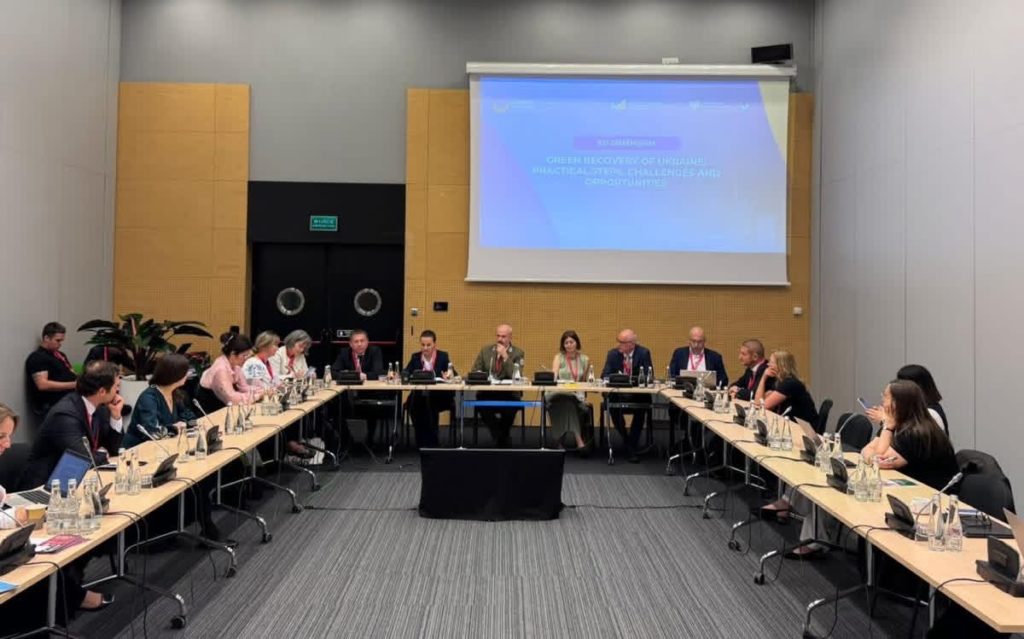
Oleksandr Krasnolutsky outlined the legal and political foundations of restoration, primarily the government’s latest steps towards adopting the 2025 Biodiversity Conservation Strategy, developing a draft law on conservation areas of Ukraine with the aim of transposing the Habitats and Birds Directives. Mr. Oleksandr emphasized that the Biodiversity Conservation Strategy is a practical action plan for the coming years. It will help to better protect valuable natural areas, restore ecosystems, and engage communities in nature conservation. At the same time, the document brings Ukraine closer to European standards in the field of biodiversity conservation. An important step in the work on biodiversity conservation is adoption of the National Energy and Climate Plan (NECP) for the period up to 2030, which defines the country’s key priorities in decarbonization, renewable energy development, and energy efficiency.
The representative of the Babia Góra National Park stressed the importance of preserving, expanding and creating new objects of the nature reserve fund. Such initiatives are relevant now, since in a couple of years such valuable territories may no longer exist due to intensive reconstruction. Mr. Tomasz emphasized that efforts should be directed not at creating ecological islands, but at creating protected areas that are interconnected. Therefore, if we do not make nature conservation a key principle of reconstruction today, valuable natural areas may disappear in the future. Also, nature has no borders and nature conservation can become the basis for intensifying cooperation between neighboring states. Such an example is Poland and the Czech Republic, which have created several transboundary protected areas and thereby improved cooperation in border regions. Therefore, international cooperation is also important from the point of view of preserving the environment of Europe as a whole.
Representative of the Organization for Economic Cooperation and Development (OECD) emphasized the importance of environmental control and monitoring reforms, which should create a level playing field for business (both Ukrainian and international), which will also allow for increased compliance with European norms and rules on environmental impact and nature protection.
Iryna Stavchuk began her speech with the vision of the concept of green reconstruction. It is a difficult taks to attract attention of politicians from other sectors using the words “green”, especially in combination with other urgent needs of the country, – emphasized Ms. Iryna. However, despite such complexity, the architecture of Ukraine’s reconstruction must include both environmental guarantees and long-term environmental goals. The reasons for this are very simple. The first reason is energy security, which means, among other things, a gradual abandonment of fossil fuels. The second reason is the crisis of human resources and the strategic task of the state to save people and return Ukrainians back to where there will be a better quality of life and the best cities to live in through real application of the principles of sustainable development during reconstruction.
Ms. Iryna emphasized that clear environmental procedures and transparent modern environmental control are necessary to ensure effective decisions on economic development and recovery. In fact, they are needed by both business and local communities to avoid conflicts and ensure sustainable use of natural resources. That is why we need to preserve the sprouts of a new modern environmental policy and work on its deepening.
In her speech, Ms. Iryna also emphasized the role of civil society in Ukraine, which continues to be active and plays both the role of a watch-dog and the role of a facilitator and co-author of reforms and transformations together with local communities.
Speaking about the challenges, Ms. Iryna focused on human potential and the lack of institutions involved in the transposition and implementation of environmental directives and regulations, including financial instruments such as the environmental fund, and the slow pace of integration with the EU.
In his speech, Roman Zinchenko shared information about the rapidly developing green companies market in Ukraine. He emphasized that for such modern companies, green ecosystems are an important part of innovation. Green business also notes the need to accelerate decision-making processes, create a flexible market for heat supply, not only for electricity supply. Discrimination between different energy sources is a concern. Mr. Roman also emphasized that Ukraine is becoming a leader in climate innovation and small and medium-sized businesses play a key role in this.

Thus, at the first workshop dedicated to Ukraine’s green recovery, both representatives of the political leadership who form environmental protection policy, and scientists, representatives of administrations of protected areas, representatives of eco-communities, and green businesses reached understanding regarding visions, approaches, and principles of green recovery, and the importance of the role of the public, territorial communities, and green business.
We hope that the workshop “Green Recovery of Ukraine: Practical Steps, Challenges and Opportunities” will give a powerful start to formation of an additional dimension at Ukraine Recovery Conference in 2027, and we will see the “Environment and Climate Change Dimension” on the agenda.
This publication was compiled with the support of the International Renaissance Foundation. Its content is the exclusive responsibility of the authors and does not necessarily reflect the views of the International Renaissance Foundation.
