
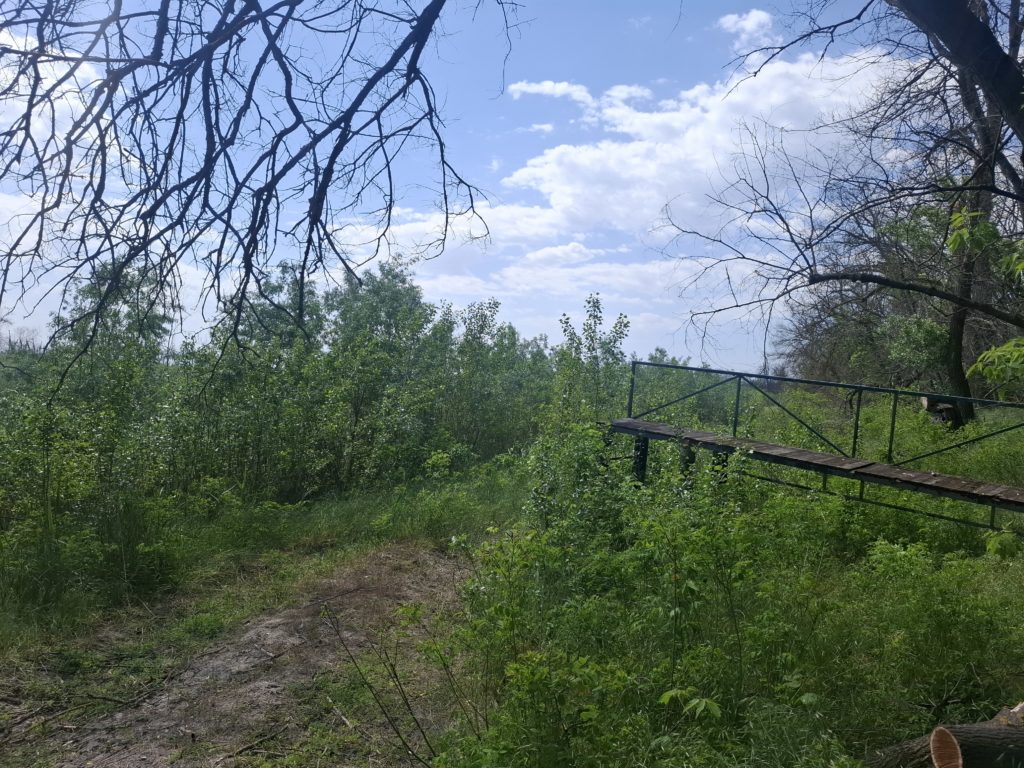
EPL employees Kateryna Polyanska and Olena Kravchenko, together with specialists from the nature conservation sector of the Khortytsia National Reserve Mykhailo Mulenko and Iryna Mikhina, visited monitoring sites established in 2024 to study changes in the natural ecosystems of the Dnipro Rapids National Zoological Reserve as a result of the impact of military operations. The research covers areas that have undergone changes in the hydrological regime after the disaster at the former Kakhovka reservoir, as well as places of fires and shelling.
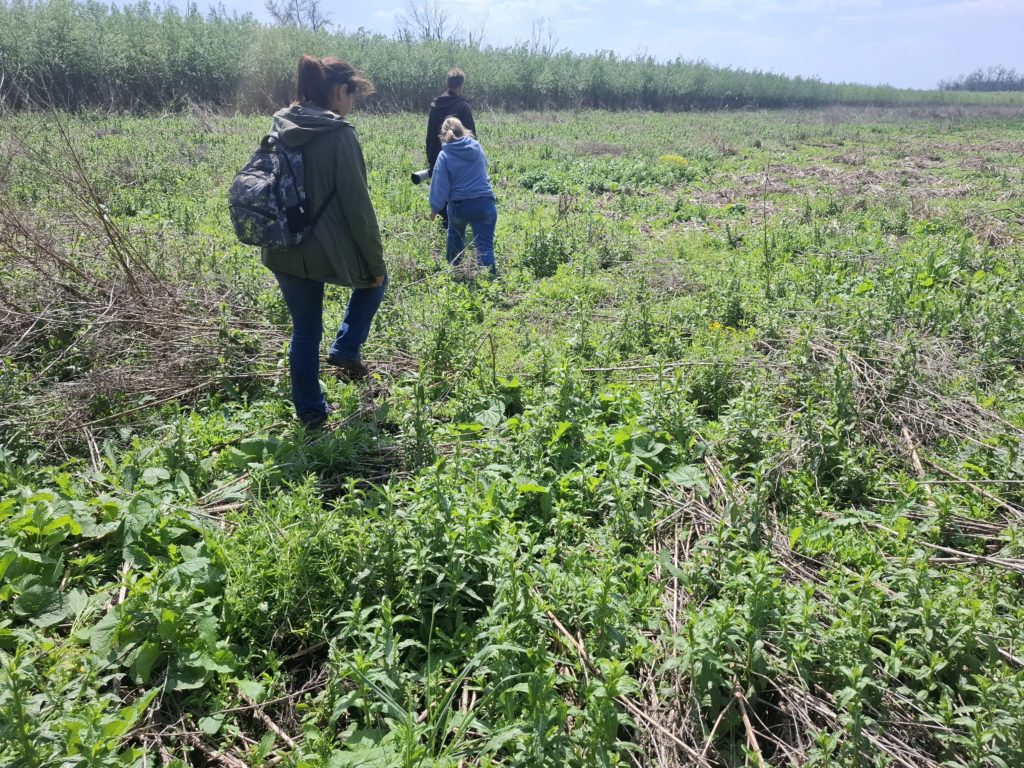
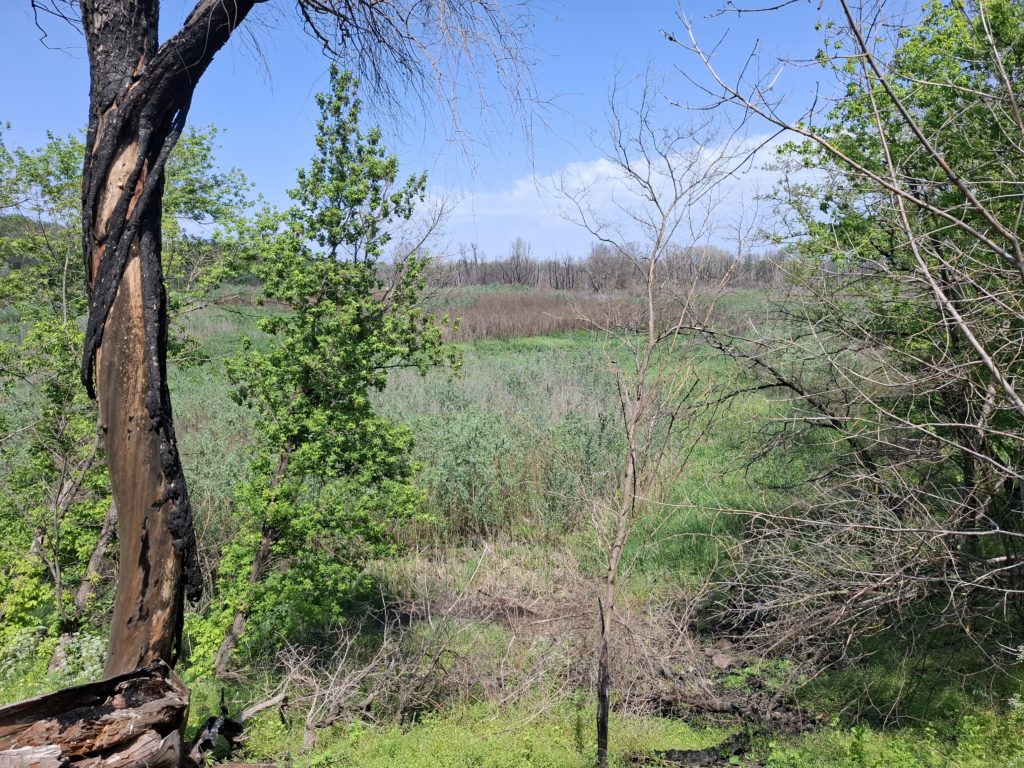
Research has been conducted annually since 2024 on the territory of the former Osokorove and Kachache lakes, as well as on a drained section of the Dnipro River bed in the southeast of the island near the village of Ovochivnyky, formed due to a drop in water level. Wetlands have begun to form in this part of the island, and biodiversity has increased compared to 2023. Areas with lower groundwater levels, closer to the coastal zone that existed before the disaster, are covered with poplar formations, areas located closer to the riverbed are covered with willows.
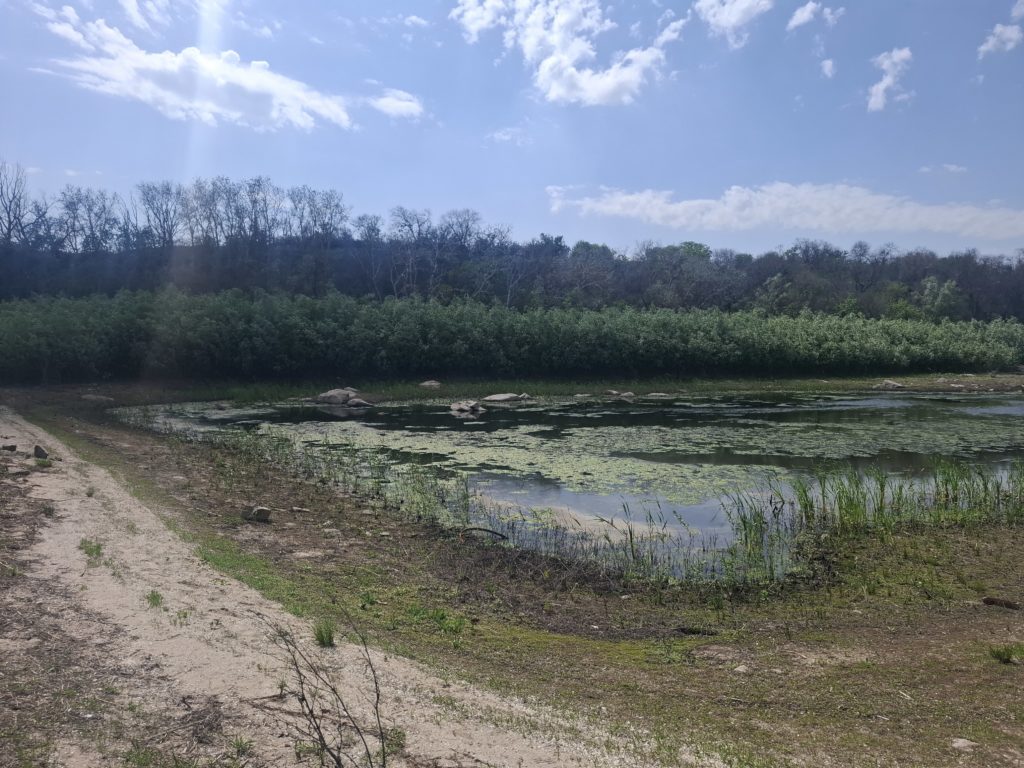
The result of the survey in May 2026 revealed that a mosaic of natural complexes was formed due to an uneven change in the hydrological regime of the territories, fires and explosions. Due to the gradual drop in the water level in the lakes Kachache and Osokorove, part of the territory was covered with water in 2024 and 2025, which restrained the processes of overgrowth and spread of willows and poplars, however, in 2026 the monitoring areas are completely located on dry land. There isongoing gradual drying out of trees over 50 years old in former coastal areas due to the drop in groundwater levels, as well as the drying out of part of the willow stands in the former Lake Kachache, which grew on a shallow area formed by sand and shell deposits.
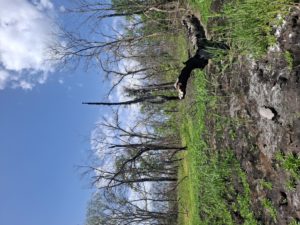
In 2025, as a result of shelling of the territory of Khortytsia Island by enemy UAVs and Tornado-S MLRS shells, a fire continued in several stages from August to October, in particular in the areas adjacent to the monitoring sites. The fire area covered approximately 329 hectares. On the territory of the former Osokorove Lake, young willow and poplar trees were exposed to heat and burns and lost their crowns, but the trunk and root systems were not damaged and are gradually recovering by forming new shoots and leaves on the lower part of the trunks.
The shelling destroyed vegetation and soil cover. There was recorded formation of a crater due to the fall of the Geran-2 unmanned aerial vehicle that happened approximately on May 2-3, 2026. At the site of the fall and explosion, there were found debris of the UAV with indicated date of its production – March 15, 2026. The diameters of the crater are 4.70 m and 4.90 m. Depth is 60 cm. The area littered with debris of UAV is approximately 600 square meters. Willow-poplar formations were destroyed on the site of the former lake ecosystem. EPL specialists took soil samples and military waste for further research in the laboratory. Photo and video recording was made. It is worth noting that the recovery processes in different areas have different time scales, so the mosaicity is dynamic and changes depending on the duration of natural processes.
The studied areas require constant monitoring. The collected data will be uploaded into the EPL database of the war impact on natural complexes of Ukraine.
EPL expresses its sincere gratitude to the staff of the Khortytsia National Reserve for joint research.
