
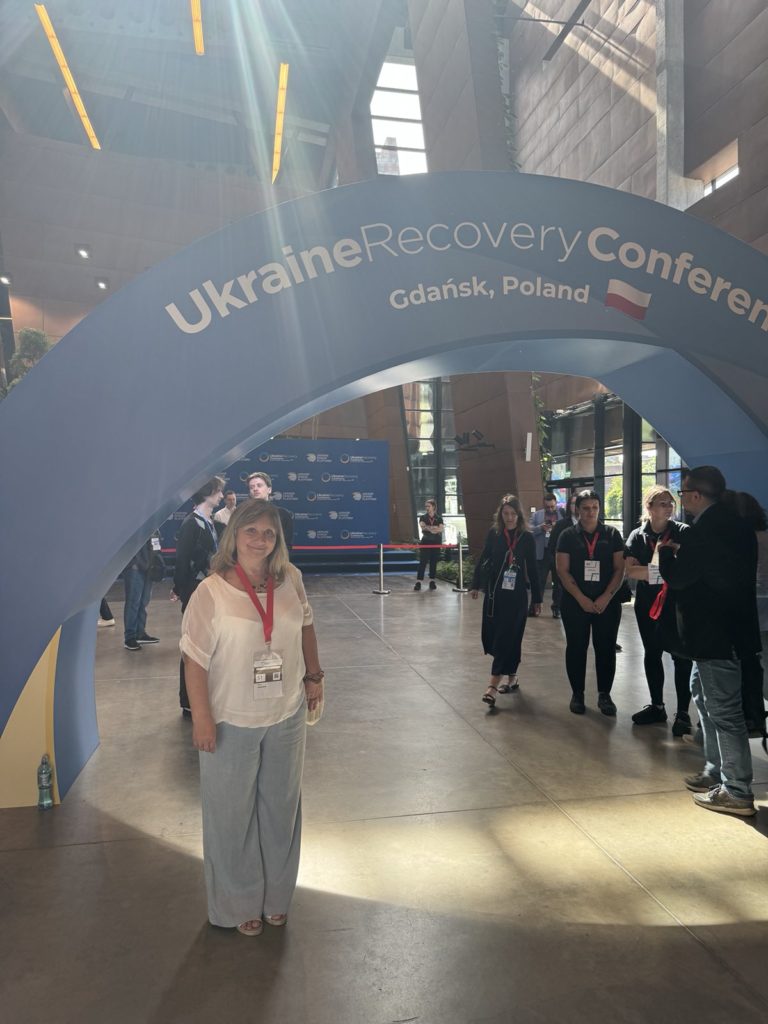
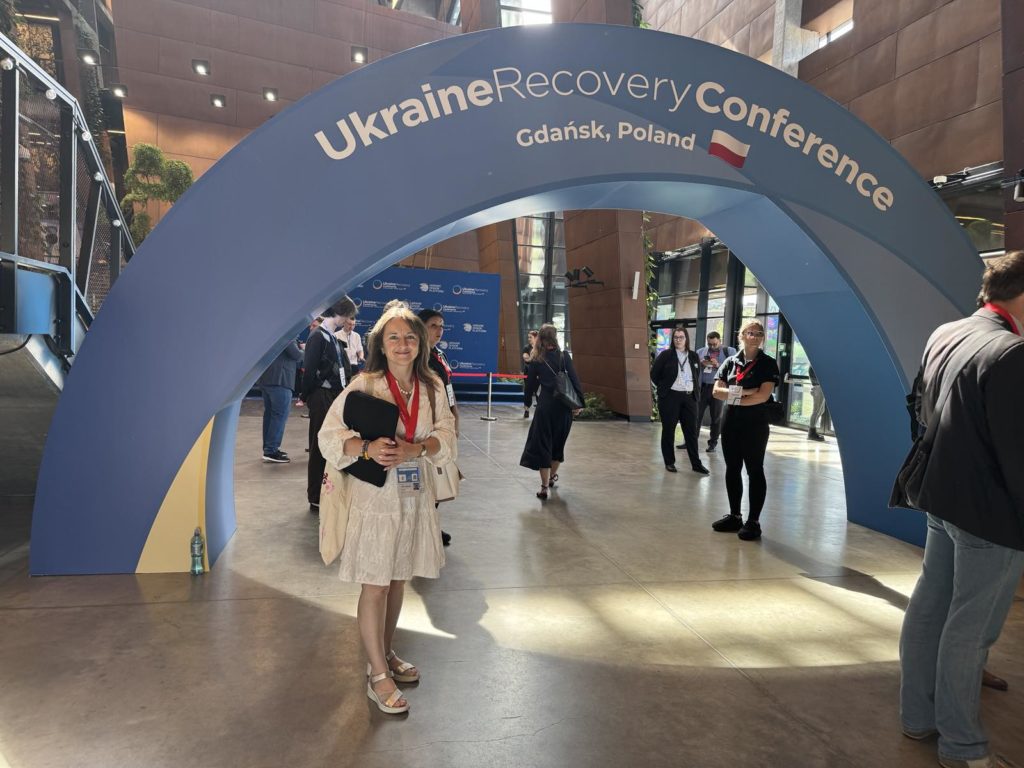
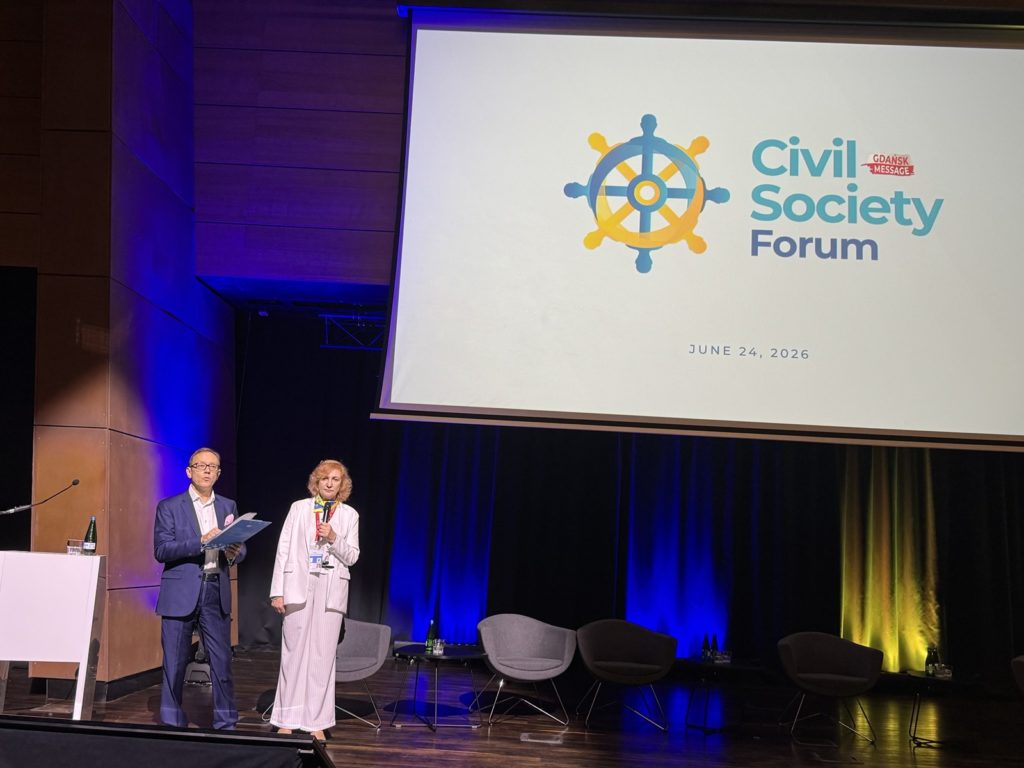
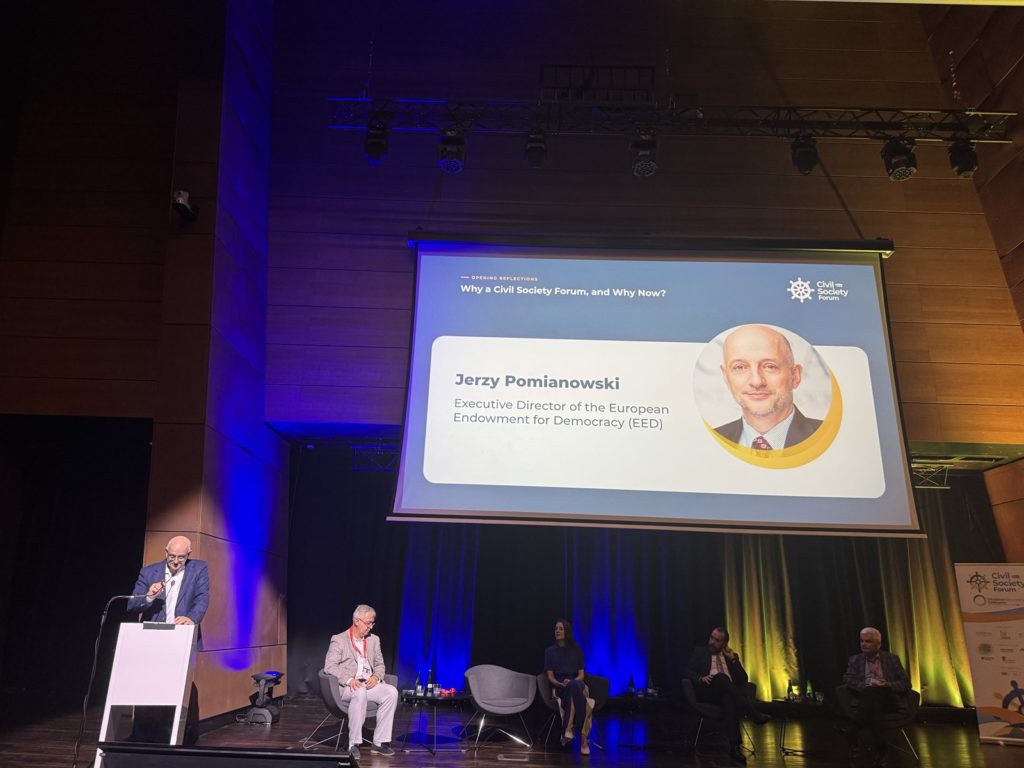
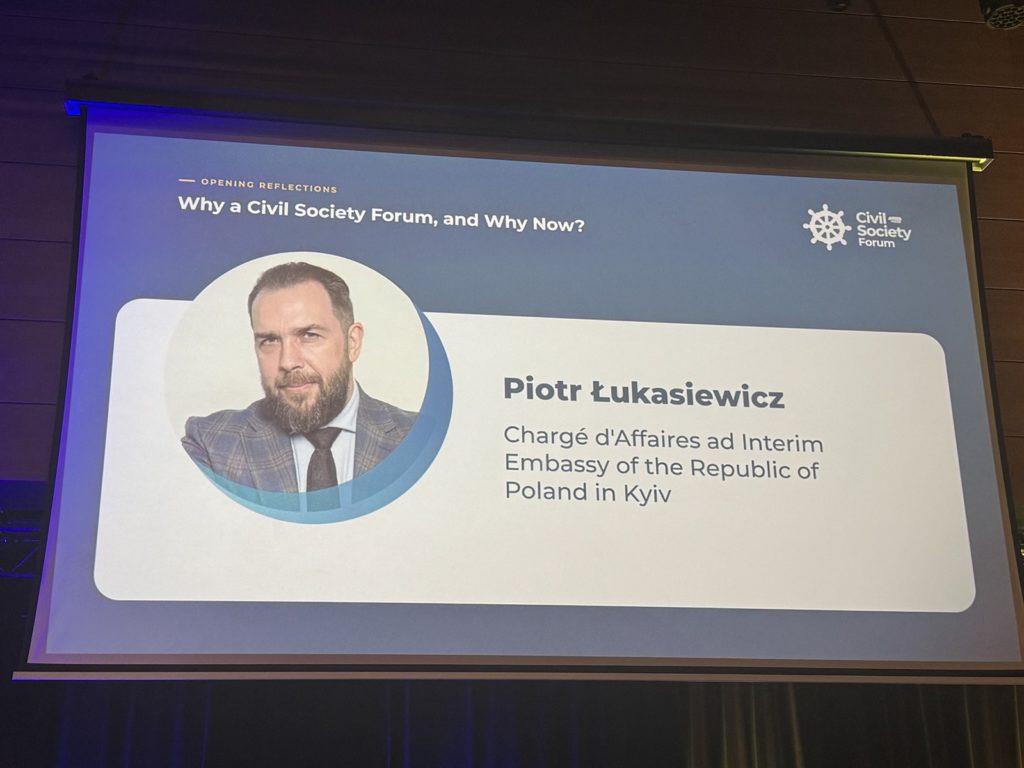
On June 24, the first civil society forum was held at the European Solidarity Center gathering a large number of representatives of mostly civil society organizations from Ukraine related to reconstruction issues and working in the areas of environmental protection, cooperation with communities, youth movements, journalism and information security, human rights protection and many others. This event is supported by major civil society donors, such as the Open Society Institute, the International Renaissance Foundation, the Stefan Batory Foundation and others. The participants were addressed by Oleksandra Matviychuk, ambassadors of the Republic of Poland and Canada to Ukraine, the head of the European Endowment for Democracy (EED), representatives of the governments donating for Ukraine’s reconstruction, as well as representatives of networks of civil society organizations working within the reconstruction domain. In particular, the following analysis was presented: The architecture of Ukraine’s reconstruction:prepared by the RISE Ukraine coalition.
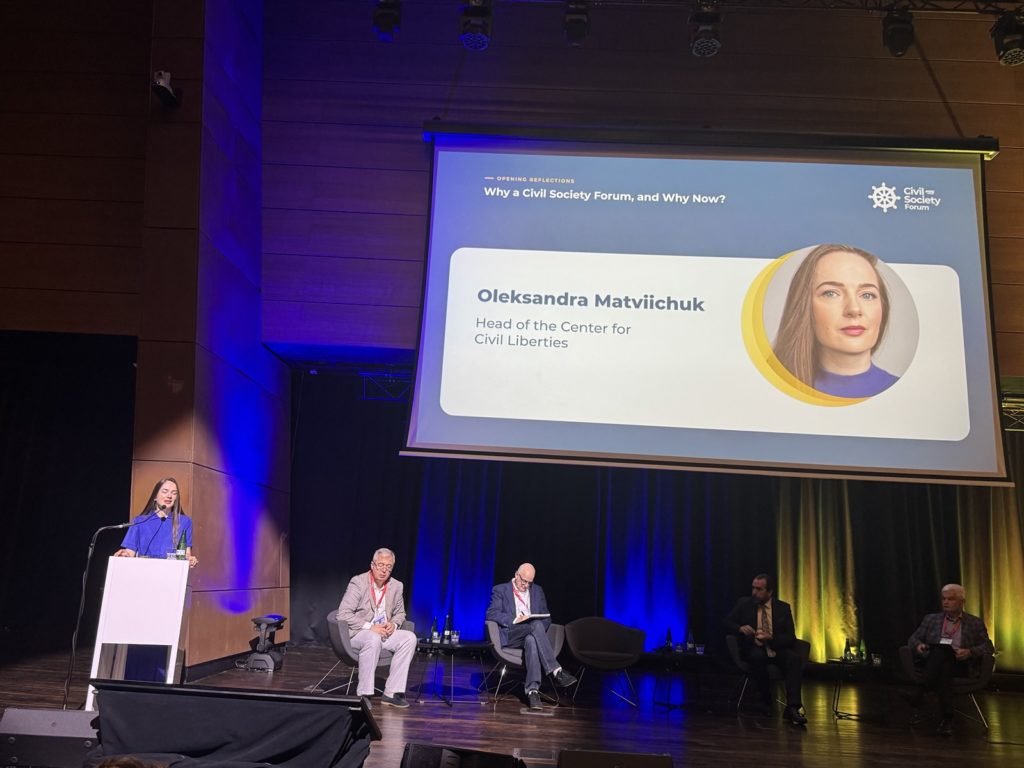
In her speech, Oleksandra Matviychuk noted that the reconstruction of Ukraine is not only about rebuilding infrastructure, but also about the human and environmental dimensions, and they must be put at the center of reconstruction. Donors emphasized the important role of civil society in the reconstruction of Ukraine and the important role of people in the struggle for independence and support for the army.
One of the blocks was moderated by Myroslava Gongadze and speakers were representatives of government programs and organizations engaged in international cooperation and support for Ukraine. The role of the public in monitoring reconstruction, in decision-making by donors at the stage of determining project priorities, as well as in creating partnerships with local governments was also discussed. Ms. Myroslava published an article:Civil society is the backbone of Ukraine on the website of Ukrainian Pravda: https://www.pravda.com.ua/columns/2026/06/24/8040847/, where she noted: “Ukraine must be reconstructed not after the war. It must survive and be reconstructed in wartime. Ms. Myroslava identified the following challenges for Ukrainian civil society:
The first challenge is that civil society still too often remains an executor, not a partner. The second challenge is the nature of funding. Many donor programs still operate within short humanitarian cycles, designed for 12 months. But Ukraine lives in the reality of a long war and a long reconstruction. The third challenge is the imbalance between physical reconstruction and the restoration of human capital. The fourth challenge is insufficient engagement of those who were most affected by the war: veterans, youth, women, people with disabilities, internally displaced persons, frontline communities, Ukrainians who were forced to leave the country.
Representatives of Ukrainian civil society also had the opportunity to contribute to development of The Gdańsk Common Message, which says that Ukraine’s recovery must be people-centred, grounded in human rights, and built as a genuine partnership in which civil society acts not just as a participant but as a strategic partner.
EPL contributed to development of Gdansk Common Message and was engaged into preparing events within the framework of URC 2026.

This publication was compiled with the support of the International Renaissance Foundation. Its content is the exclusive responsibility of the authors and does not necessarily reflect the views of the International Renaissance Foundation.
